A New Roof Addition Can Change What Your Existing Gutters Must Handle
Adding a room, garage, or second story can change more than your home’s appearance. A new roof section may increase the area draining into existing gutters or redirect runoff toward a single corner. Gutters that worked well before the addition may struggle with the new drainage pattern.
“Can your existing gutters handle the extra runoff your roof addition sends their way?“
The answer depends on where the new roof directs water, the capacity of your gutters, and the location of your downspouts. Reviewing these details before construction is complete can help prevent overflow, water collecting near the foundation, and repairs that become harder once the addition is finished.
Key Takeaways
- Roof additions can increase gutter demands.
- New valleys can concentrate roof runoff.
- Downspouts must accommodate increased water flow.
- Larger gutters cannot fix every problem.
- Review drainage before completing your addition.
Your Roof Addition Can Change Where Rainwater Goes
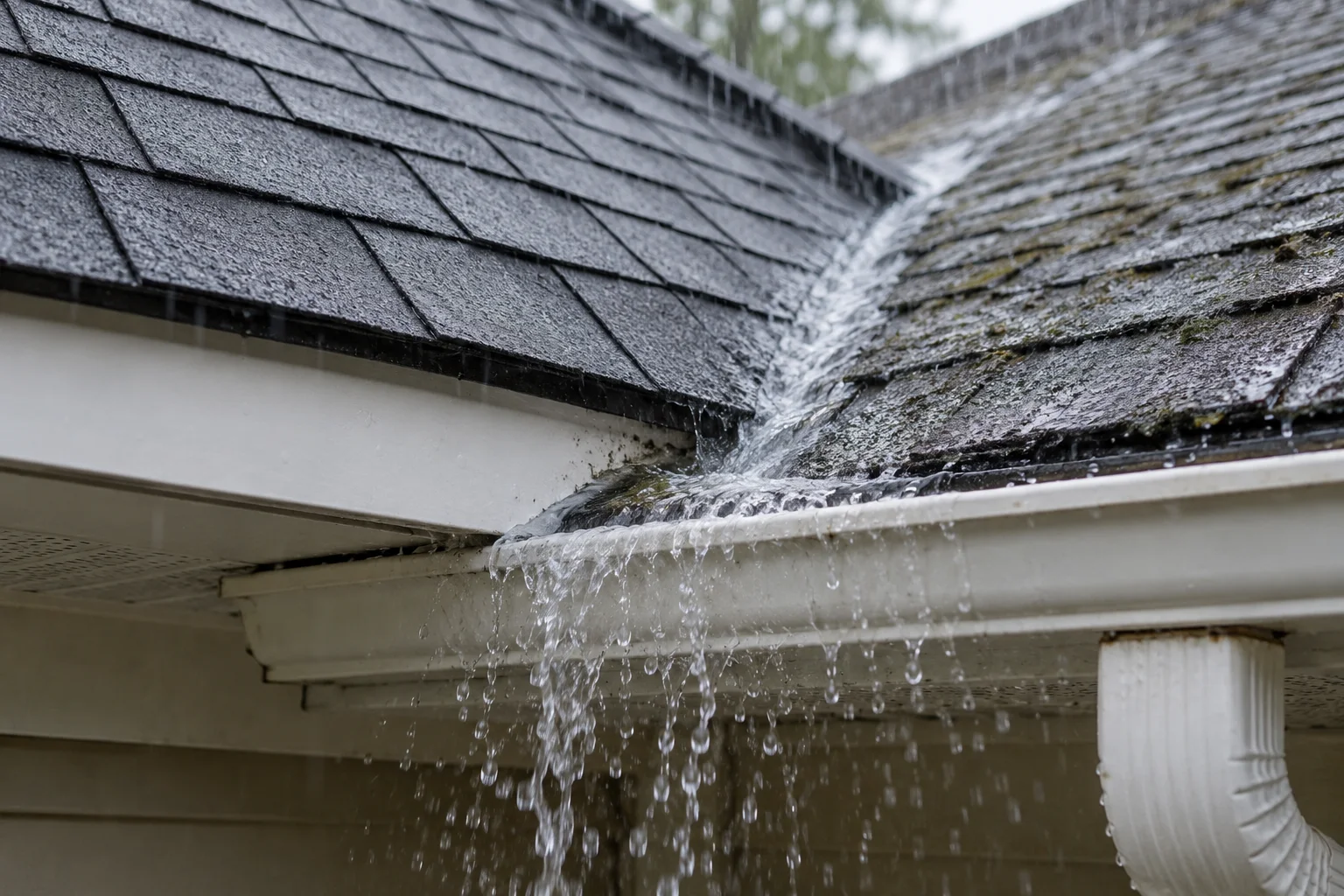
A roof addition changes the surfaces that collect rainfall and the routes water follows toward the ground. Even a relatively small addition can affect drainage if it concentrates runoff at one location.
More Roof Area
If a new roof section drains into an existing gutter, that gutter receives water from a larger collection area. During the same rainfall, more roof area means more runoff for that section to handle.
For example, a garage addition connected to the side of a house may send water toward a gutter that previously served only the original roof.
New Roof Valleys
Where two sloping roof sections meet, a valley can collect water from both surfaces. That concentrated flow may reach a short section of gutter near the valley’s lower end.
The total gutter length can look adequate while the section beneath the valley struggles to capture incoming water.
Redirected Water Flow
A second-story addition or a revised roofline can shift runoff toward a different side of the house. Existing downspouts may no longer sit where the drainage system needs them.
Reviewing the proposed roof layout helps identify these changes before gutter installation begins.
Existing Gutters May Not Match the New Drainage Demands
Gutters can look straight and undamaged while lacking capacity for a changed roof layout. An assessment should follow water from each roof surface through the gutters, outlets, downspouts, and discharge points.
The main factors include:
-
Contributing roof area: Identify which roof surfaces drain into each gutter run.
-
Roof pitch and geometry: Consider how roof slopes and valleys deliver runoff.
-
Local rainfall intensity: Size the system for appropriate local design rainfall conditions.
-
Gutter condition and slope: Check for deformation, obstructions, and sections that hold water.
-
Outlet and downspout capacity: Confirm that collected water can leave the gutter efficiently.
-
Final discharge route: Check extensions and underground connections for restrictions or unsuitable discharge locations.
Replacing gutters based only on their age or appearance can miss the actual drainage problem.
Warning Signs Your Gutters Are Struggling After an Addition
Rainfall can reveal problems that remain hidden during dry weather. Observe the system from the ground, keeping away from slippery surfaces and avoiding ladders during storms.
Look for:
-
Water spilling over a particular corner or gutter section.
-
Runoff shooting beyond the gutter near a roof valley.
-
Water remaining in sections after rainfall has ended.
-
New dripping at corners or end caps.
-
Soil washout or mulch displacement beneath the roof edge.
-
Water collecting beside the addition or original foundation.
These signs do not automatically mean the gutters are too small. Debris, incorrect positioning, poor slope, or a blocked downspout can produce similar symptoms. Finding the cause helps prevent spending money on an upgrade that leaves the problem unresolved.
Downspouts Need Attention Along With the Gutters
Larger gutters provide limited benefit if water cannot leave them efficiently. Outlets, downspouts, and connected drains need to support the revised runoff pattern.
Check Outlet Capacity
The outlet is the opening where water leaves the gutter and enters the downspout. A restricted outlet can cause water to back up even when the gutter has room to carry more flow.
Depending on the layout, correcting the problem may require a larger outlet, another downspout, or a different outlet location.
Review Upper Discharge
An upper-story downspout that empties directly onto a lower roof creates concentrated flow across the shingles. This can contribute to localized wear and increase the amount of water reaching one lower gutter section.
Assess whether the upper downspout can connect to a suitable drainage route. Any modification should account for roof penetrations, maintenance access, and the capacity of the receiving system.
Follow Water Downstream
Water leaving the downspout still needs somewhere suitable to go. An addition may interrupt an existing extension, alter ground levels, or place a new wall near an old discharge point.
Underground drains also need attention. A blocked or damaged pipe can cause backups regardless of the size of the gutters above it.
Gutter Changes Should Address the Specific Drainage Problem
Different symptoms call for different corrections. The following table shows how an assessment can connect a finding with a practical response.
| Assessment Finding | Potential Correction | Intended Result |
|---|---|---|
| Added roof area exceeds gutter capacity | Install appropriately sized gutters | Handle the revised runoff load |
| One outlet receives excessive flow | Add or reposition outlets and downspouts | Distribute discharge more effectively |
| Incorrect slope leaves standing water | Adjust gutter alignment and slope | Improve drainage toward outlets |
| Concentrated runoff misses the gutter | Review gutter positioning and roof-valley discharge details | Improve runoff capture |
| An underground connection backs up | Inspect, clear, repair, or resize the drain as needed | Restore downstream drainage |
A correction should address the complete flow path. Improving one component can expose a restriction farther downstream, especially where new gutters connect to older drainage pipes.
Six-Inch Seamless Gutters May Help, but Sizing Comes First
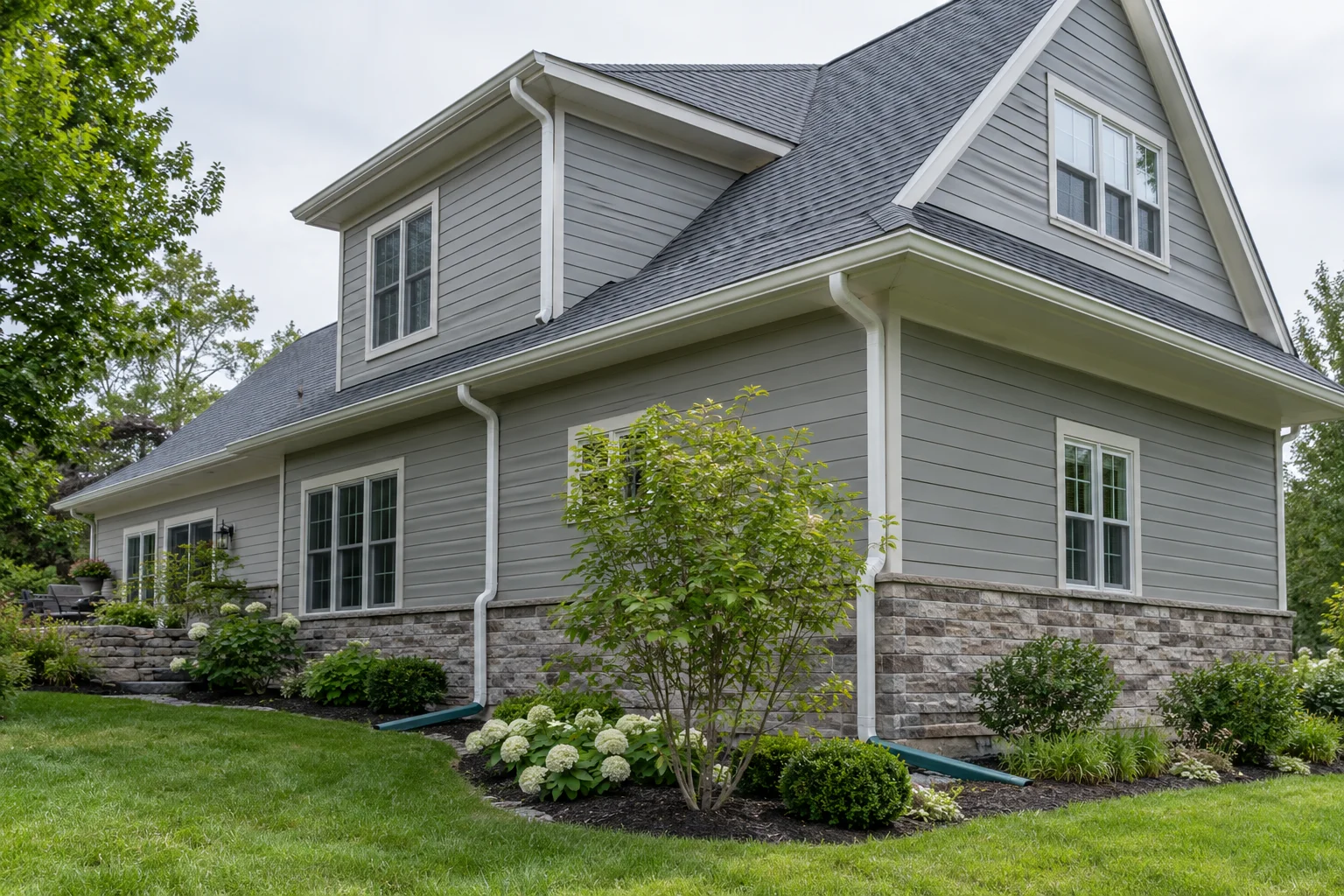
Six-inch K-style gutters can provide additional capacity compared with otherwise comparable five-inch systems. They may suit an addition that increases the roof area draining into an existing gutter run.
However, a six-inch gutter is not an automatic solution. Incorrect slope, poorly positioned outlets, blocked downspouts, and unsuitable discharge routes can still cause problems. The appropriate size depends on the roof layout and drainage calculations.
Seamless gutters also reduce the number of joints along straight runs. They still have connections at corners, outlets, and end caps that need proper installation and inspection.
Attachment matters as well. The fascia and supporting structure should be sound enough to secure the system. Covering deteriorated wood with new gutters leaves an underlying problem in place.
Plan Gutter Changes Before Construction Is Finished
Planning drainage early gives the roofing and gutter work room to fit together. It also reduces the chance that a downspout ends up blocking a window, crossing a walkway, or discharging beside new foundation work.
Before the addition is complete:
-
Mark where each new roof section will discharge.
-
Check existing gutters and supporting fascia.
-
Coordinate gutter placement with roof-edge flashing.
-
Confirm accessible downspout locations.
-
Review ground slopes and underground drainage connections.
-
Inspect the completed system and observe its performance during rainfall.
Pro Tip: Before construction begins, photograph existing outlets and note overflow locations during rain from a safe ground-level position. Share those observations with your contractor.
Protect Your Addition With Proper Roof Drainage
A roof addition should prompt a fresh look at the gutters serving the affected roof sections. Increased collection area, new valleys, and redirected runoff can change what those gutters must handle.
Contact Us at DNB Roofing to assess your addition’s roofing and gutter needs before drainage problems develop.